

When someone close to you is admitted to the ICU, everything suddenly feels serious. The sound of machines, doctors walking quickly, and nurses checking monitors, it can all feel overwhelming. In that moment, you’re not thinking about medical terms. You’re just hoping your loved one is getting the best possible care.
Many families quietly wonder what really happens inside an ICU. How do physicians choose which patients to treat first? How do they manage so many critical patients at once? In a well-equipped Hospital in Siliguri, ICU care may look intense from the outside, but inside, there is a clear system, strong teamwork, and constant attention to every patient’s needs.
ICU Care Is Different from Regular Hospital Rooms
The Intensive Care Unit is designed for patients who are very sick or need close monitoring after major surgery. These patients may be dealing with serious infections, heart problems, breathing difficulties, organ failure, or severe injuries.
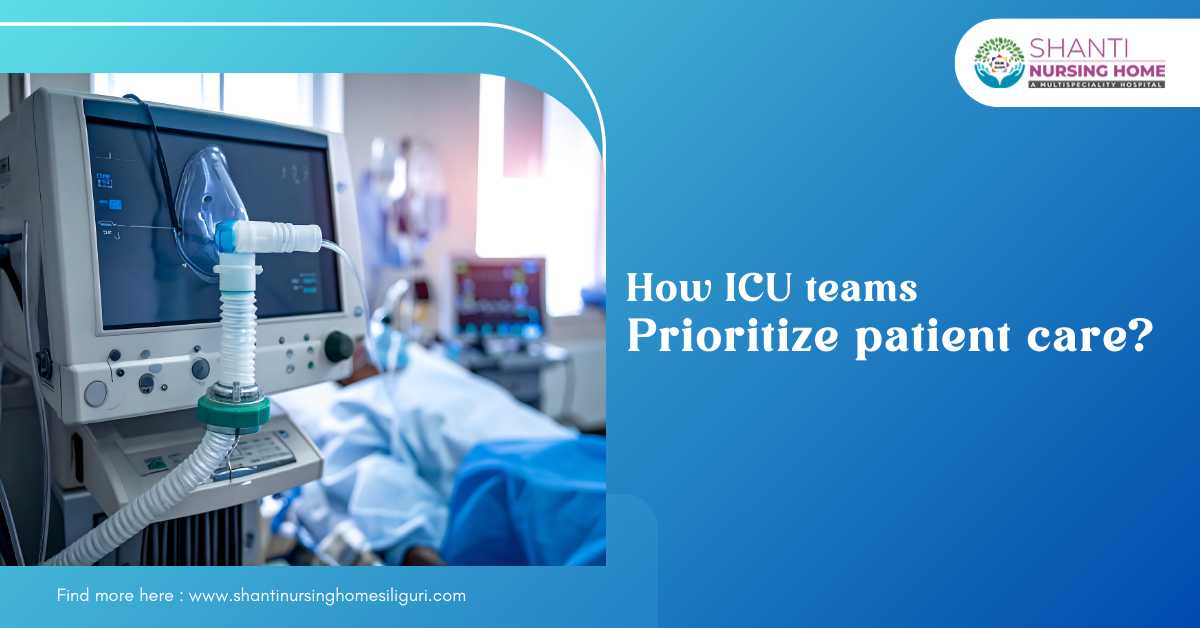
Unlike regular hospital rooms, ICU beds are surrounded by advanced monitors and life-support machines. Every heartbeat, every breath, and every small change in the body is closely tracked. Since a patient’s condition can change within minutes, ICU care requires constant attention, and that’s why prioritizing each patient’s needs becomes so important.
The Most Critical Patient Comes First
In the ICU, doctors and nurses constantly assess who needs help right away. This process is called triage, a simple way of deciding which patient requires immediate attention.
For example, if one patient’s oxygen level suddenly drops while another is stable, the team quickly focuses on the one who is struggling to breathe. If someone’s blood pressure falls to a dangerous level, action is taken without delay.
This doesn’t mean other patients are ignored. It simply means care is given based on urgency. The most unstable or critical patient is always treated first. It may look intense, but it’s a careful and systematic medical decision, not an emotional one.
Monitoring Every Small Change
One of the biggest reasons ICU teams can prioritize effectively is technology.
Each patient is connected to monitors that track:
-
Heart rate
-
Blood pressure
-
Oxygen levels
-
Breathing rate
- Temperature
If anything changes beyond safe limits, alarms alert the nurses instantly.
But here’s something many people don’t realize: machines are helpful, but human observation is just as powerful. Experienced ICU nurses can often sense subtle changes before the monitor even alarms. A slight change in breathing pattern, skin color, or responsiveness can signal early trouble.
That combination of technology and experience allows quick action.
Behind Every ICU Decision Is a Strong Team
ICU care is never handled by just one doctor or nurse. It’s always a team effort. From critical care specialists and trained nurses to respiratory therapists and support staff, everyone plays an important role.
They regularly discuss each patient’s condition, review reports, adjust treatments, and plan the next steps together. Clear communication and coordination help them respond quickly when something changes. In the ICU, teamwork isn’t just helpful; it’s what makes safe and timely care possible.
.png)
Patients Are Categorized by Stability
To manage multiple critical patients, ICU teams often group them based on how stable they are.
Highly Unstable Patients
These patients may require ventilators, emergency medications, or constant interventions.
Moderately Critical Patients
They need close observation but may not require life-support machines at the moment.
Recovering Patients
They are improving but still need monitoring before shifting to a general ward.
This classification helps distribute attention and resources fairly and effectively.
Quick Response to Emergencies
Even in the ICU, emergencies can happen without warning.
If a patient’s heart stops or breathing suddenly becomes irregular, a rapid response team acts immediately. Every ICU professional is trained in CPR and advanced life support.
Because of this training, there is no panic, only action.
Within seconds, doctors and nurses begin life-saving procedures. Each person knows their role, and every second is used wisely.
Infection Control Is Taken Seriously
ICU patients are more vulnerable to infections because their immunity is often weak.
That’s why hygiene protocols are strict:
-
Regular hand sanitization
-
Sterile equipment
-
Limited visitor entry
- Frequent cleaning
Preventing infection is part of prioritizing care. A new infection can worsen a patient’s condition quickly, so prevention becomes as important as treatment.
Supporting Patients and Families with Compassion
While medical stability is the top priority, emotional care is never forgotten.
Families waiting outside are anxious and scared. Doctors try to provide regular updates in simple language, so relatives understand what’s happening.
For patients who are conscious, reassurance matters. A calm voice, a gentle explanation, or even holding a hand can reduce fear.
Healing isn’t just physical; it’s emotional too.
Daily Review and Planning for Recovery
Every day in the ICU begins with reassessment.
Doctors ask:
-
Is the patient improving?
-
Can ventilator support be reduced?
-
Can medicines be decreased?
- Is the patient stable enough to move out of the ICU?
The ultimate goal is recovery. The moment a patient becomes stable, the team prepares for a safe transfer to a general ward.
ICU care is intense, but it is always aimed at progress.
Handling Difficult Decisions
Sometimes ICU teams face difficult situations, especially if resources are limited or multiple emergencies occur at once.
In such cases, decisions are guided by medical protocols, the severity of illness, and the chances of recovery. These decisions are never personal or biased; they are based on professional standards and ethical guidelines.
Though hard, these choices are made with patient welfare at the center.
The Role of Advanced Facilities and Skilled Hands
Prioritizing patient care in an ICU requires:
-
Advanced monitoring systems
-
Emergency-ready equipment
-
Skilled doctors
-
Experienced nursing staff
- 24/7 availability
Without proper infrastructure and trained professionals, managing critical care becomes extremely challenging.
That’s why choosing the right hospital makes a difference during emergencies.
Conclusion
From the outside, ICU care can feel frightening and intense. But inside, it’s calm, organized, and handled by a team that knows exactly what to do. Every decision is made with care, focusing first on the patient who needs the most urgent help. Doctors and nurses closely watch every heartbeat and every small change, staying alert every second because they know that even a moment can make a difference.
If you’re looking for a trusted hospital in Siliguri, Shanti Nursing Home provides dedicated ICU care with experienced professionals and compassionate support when it matters most.