


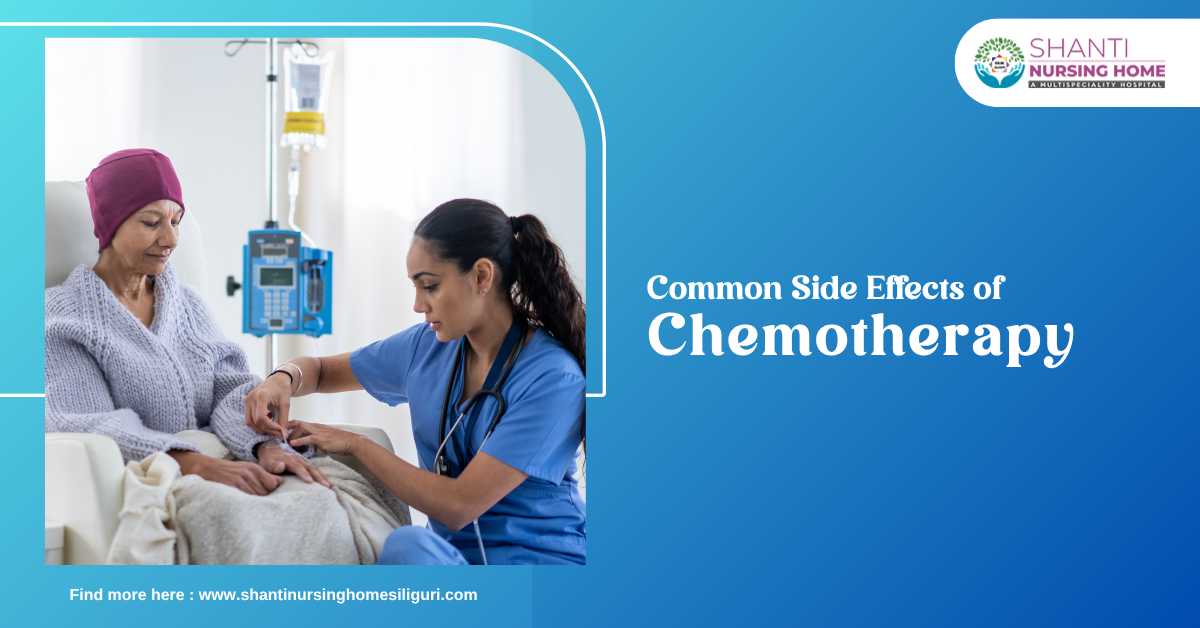
Chemotherapy serves as one of the strongest weapons when receiving a cancer diagnosis that marks the start of a challenging battle.
A common part of the treatment process is to use drugs that target the cancer cells. However, it unintentionally also damages the healthy cells in your body.
Affecting thesehealthy cells can affect your hair, skin, mouth, and digestive tract and cause side effects later.
Leading to intense fatigue, nausea, hair loss, and a weakened immune system that increases infection risk.
Cancer treatment in Siligurihas advanced significantly, with modern oncology centers offering specialized chemotherapy, radiation, and surgical care.
While these side effects can be challenging, most are manageable, temporary, and gradually resolve after the treatment cycle ends.
To make things easier for you, this blog offers an insight into the common question, which is, the common side effects of chemotherapy?.
What is Chemotherapy?
A treatment that uses powerful drugs to destroy cancer cells is called chemotherapy, and it works by stopping or slowing the growth of cells that multiply quickly.
It affects the whole body, which can also impact healthy, fast-growing cells, while it is a primary treatment to cure or shrink cancer.
Here is how it works
Chemotherapy is a systemic therapy using drugs, unlike localized treatments like surgery or radiation.
These drugs travel through your bloodstream, enabling them to reach the cancer cells, almost anywhere in your body.
Here is how doctors use chemotherapy in several distinct ways.
- Curative:
As a curative, treatment is designed to completely heal the disease and is the opposite of a treatment that only manages symptoms or slows a disease down.
This is used as the primary treatment to eliminate the cancer.
- Adjuvant:
Adjuvant is an additional treatment given after the primary treatment to lower the risk of the disease. It is administered after surgery or radiation to kill any hidden cancer cells that may remain.
- Neoadjuvant:
Neoadjuvant therapy is a treatment given before the primary treatment, usually surgery, to shrink a tumor and make it easier to remove. This is given before surgery or radiation to shrink a large tumor and make it easier to remove.
- Palliative:
A treatment focused on relieving symptoms, reducing pain, and improving the quality of life for people living with a serious illness, but is not meant to cure the disease.
This is used to shrink tumors and reduce pain or symptoms when the cancer cannot be cured.
Why Does Chemotherapy Cause Side Effects?
Because chemotherapy cannot tell the difference between fast-growing cancer cells and fast-growing healthy cells, it causes side effects.
It targets any cell in the body that is actively dividing and multiplying, since traditional chemotherapy is a systemic treatment that travels throughout your entire bloodstream.
Because certain areas of your body naturally rely on rapid cell division to function and renew themselves.
This is when chemotherapy drugs inadvertently damage these healthy tissues, which further leads to the occurrence of certain side effects.
What are Some of the Common Side Effects of Chemotherapy?
Chemotherapy side effects occur because the drugs target fast-growing cancer cells along with unintentionally also targeting the healthy cells of your body.
While undergoing chemotherapy, it destroys these healthy cells, which further causes side effects that are evident in your body and appearance, like destroying the bone marrow, hair follicles, and digestive tract.
But most of these side effects are temporary and resolve after treatment ends, though some can persist.
It mostly affects how a person reacts and depends on this specific drug, overall health, and dosage.
Here are some of the side effects caused by chemotherapy based on the different systems of your body.
1. Blood and Immune System Changes Caused by Chemotherapy
By temporarily suppressing the bone marrow, chemotherapy causes your blood and immune system changes.
This is because the bone marrow is the spongy tissue inside the bones, which is responsible for producing all the body’s blood cells.
And because chemotherapy targets rapidly dividing cells, it also slowly shuts down this production factory, which is a medical condition known as myelosuppression or bone marrow suppression.
- An Increased Risk of Infection:
By causing changes in your blood and immune system, chemotherapy can lead to an increased risk of infection, which is the most serious and common complication of it.
This is because chemotherapy temporarily suppresses the bone marrow function, which leads to the body’s production of white blood cells falling dramatically.
A condition called neutropenia develops when the level of a specific white blood cell called a neutrophil drops significantly.
- Fatigue:
Fatigue is the most universal and persistent side effect of chemotherapy, which affects up to 90% of patients, and is a result of extreme exhaustion caused by chemotherapy.
Cancer-related fatigue is not relieved by a good night’s sleep and is certainly not caused by recent exertion, unlike everyday tiredness.
It can often trigger anemia, which happens when red blood cell counts drop.
2. Digestive System Disruptions Caused by Chemotherapy
Apart from affecting your blood and immune system, chemotherapy also affects your digestive system because it targets rapidly dividing cells.
The cells lining your entire gastrointestinal (GI) tract, starting from your mouth to your colon, naturally replaces itself every few days.
Leading to inflammation, structural changes, and irritation throughout the digestive system, and chemotherapy drugs mistakenly destroy these healthy, fast-growing mucosal cells alongside cancer cells.
- Causing Nausea and Vomiting:
The first digestive change that chemotherapy causes is nausea and vomiting, but it is a highly manageable side effect.
This is triggered by chemo drugs irritating the stomach lining and stimulating the brain’s vomiting centers.
It affects a large majority of patients if left untreated, but modern oncology relies on highly effective, preventative medication regimens to control it.

- Mouth Sores or Mucositis:
Another digestive change caused by chemotherapy is mouth sores or mucositis, which are painful inflammation and ulceration of the mucous membranes inside the mouth, tongue, lips, and throat.
This leaves the delicate tissues beneath exposed and raw, and happens because chemotherapy destroys the fast-growing healthy cells that line your digestive tract.
Sores typically develop 5 to 10 days after a chemotherapy session and generally resolve within 2 to 3 weeks once your blood counts begin to recover.
- Changes In Appetite and Taste:
Experiencing changes in your appetite and taste is another digestive change caused by chemotherapy, because it temporarily damages the rapidly dividing cells of your taste buds and olfactory or smell receptors.
These changes usually develop a few days after a treatment cycle and typically wear off a few weeks after chemotherapy is fully completed.
3. Skin, Hair, and Nerve Sensations Caused by Chemotherapy
Another system that gets affected by chemotherapy is your skin, hair, and nerve sensations, because it targets cells that naturally regenerate at a rapid pace.
Hair follicles and skin layers are constantly renewing, which makes them highly susceptible to chemotherapy drugs.
Additionally, certain chemotherapy agents can irritate or damage the delicate nerve fibers furthest from your spinal cord, altering your physical sensations.
- Hair Loss or Alopecia:
Hair loss or alopecia is the most common effect of chemotherapy, where your hair gets thin or completely lost, which typically begins 7 to 21 days into the treatment.
This is caused by drugs attacking the rapidly dividing cells within hair roots, and can also affect the scalp, eyelashes, eyebrows, and body hair, but is a temporary effect.
- Peripheral Neuropathy:
Peripheral neuropathy is a type of nerve damage that affects the peripheral nervous system, altering the sensation in the hands and feet.
In chemotherapy, it occurs when specific chemotherapy drugs damage the delicate nerve fibers furthest from the spinal cord, disrupting the signals sent between your brain and your extremities.
- Changes in Your Skin and Nail:
Because it disrupts the rapidly dividing cells responsible for continues epidural renewal and nail growth, chemotherapy causes skin and nail changes.
These changes usually develop within the first few weeks of starting treatment and are mostly temporary, resolving gradually after your chemotherapy regimen concludes.
Here, the skin may become intensely dry, itchy, red, or sensitive to sunlight. Nails can become brittle, cracked, or discoloured.
Conclusion
Chemotherapy has effects on different systems of your body, like the digestive, blood, immune, skin, hair, and many more.
These can be in the form of hair loss, changes in appetite, changes in skin and nails, fatigue, increased risk of infection, and many more.
Patients seeking comprehensive oncology medical services can access advanced cancer treatment in Siliguri at regional healthcare centers like Shanti Nursing Home.
Consult the best oncological medical services near you to detect the early signs of cancer.

