




It is completely normal to feel panicked and overwhelmed when a family member suddenly gets sick or injured.
Hospitals can be confusing places, and trying to figure out where your loved one needs to go only adds to that stress.
Knowing whether they need a regular room or a specialized unit helps you make fast, smart choices.
If you are looking for a hospital in Siliguri, understanding the options of whether to visit the ICU or the general ward saves you time, money, and unnecessary worry.
This is because hospitals separate patients based on how sick they are and how much care they need.
A general ward is for stable patients who just need standard medical care and a place to heal. An Intensive Care Unit (ICU) is a highly monitored area for patients who need constant attention and advanced life support.
This simple guide will break down the clear differences between these two areas.
What is a General Ward?
A general ward is a shared hospital room for patients who need continuous medical care but do not require intensive, life-support interventions.
It acts as a standard recovery area where vital signs are checked periodically by a shared nursing staff.
Patients here are fully awake, breathing easily on their own, and able to talk to their families and the nursing staff.
Here is a clear description for a better understanding of a general ward.
- The Routine:
The routine here is that nurses walk in every hour to check basic things like temperature and blood pressure.
- Who Stays Here:
People who are recovering from standard surgeries, patients receiving IV fluids or antibiotics, and individuals staying overnight for basic medical testing.
- Ward Environment:
It is usually a relaxed space where family members can sit beside the patient all day to offer emotional support. Here, the patients can move freely around, and doctors visit a couple of times during their regular rounds to check progress.
What is an Intensive Care Unit, also known as an ICU?
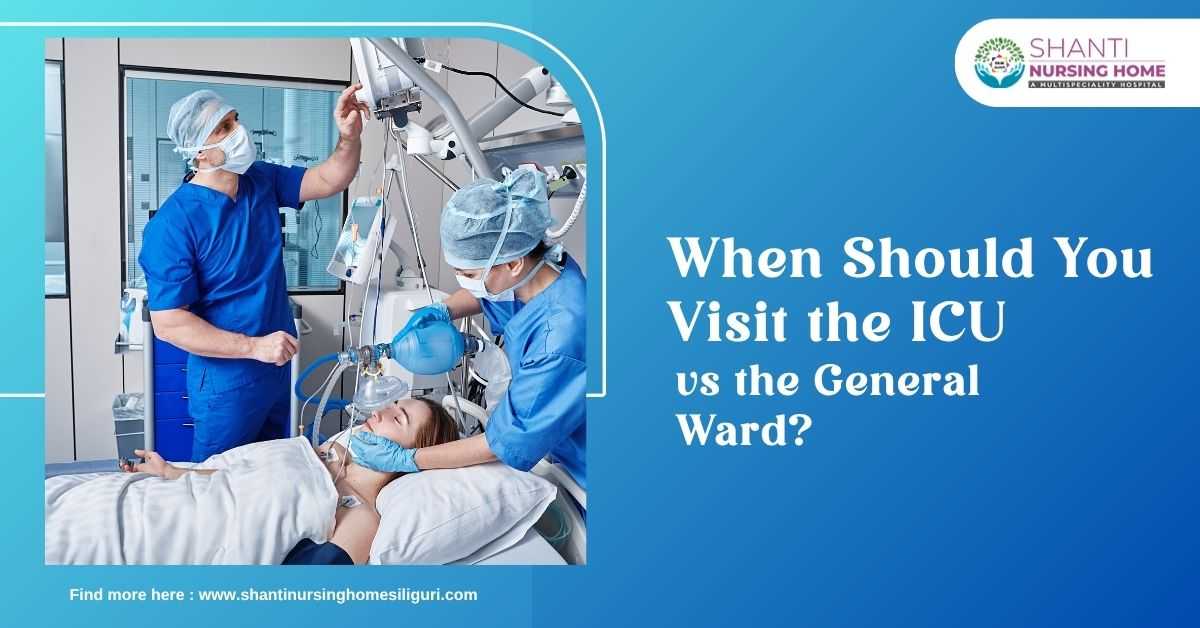
Built purely for patients fighting severe, life-threatening medical emergencies, ICUs or Intensive Care Units are highly secure and specialized zones.
It is a strictly controlled environment designed to keep germs out, meaning visitors are rarely allowed inside.
Here is a clear description for a better understanding of an ICU.
- The Routine:
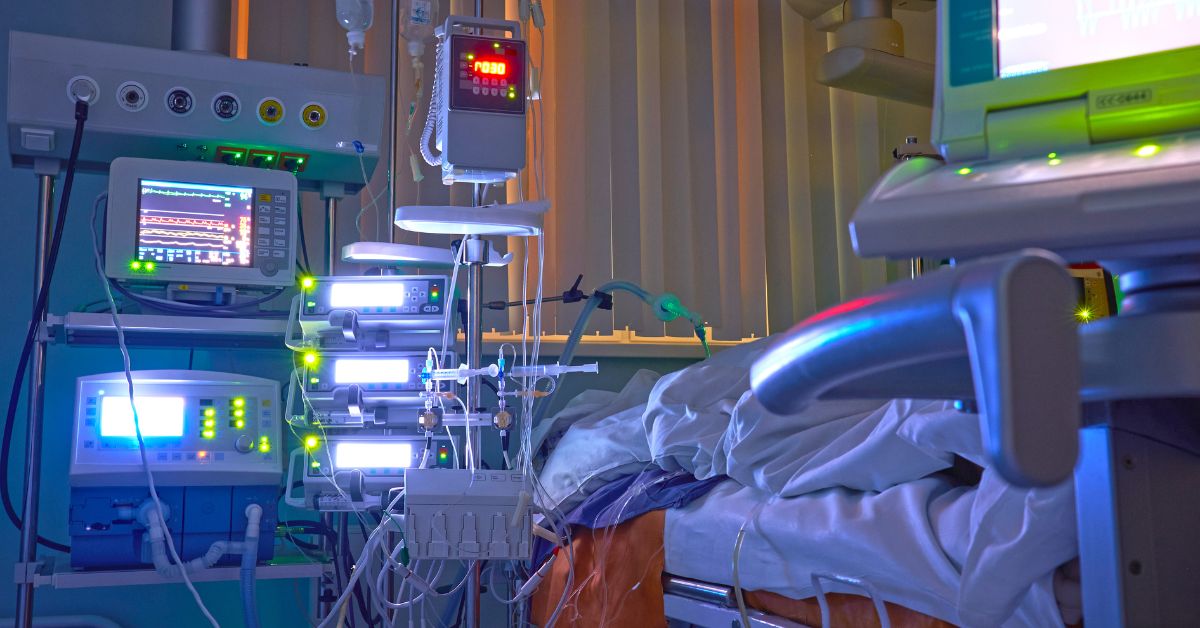
Here, every single bed is surrounded by electronic screens that track the heart rates, oxygen levels, and brain activity every single second.
- The Staff:
Because the patients are so sick, one nurse usually looks after just one or two people, staying by their side constantly.
- Who Stays Here:
Patients whose vital organs, like their lungs, heart, or kidneys, are struggling to work on their own stay here. The room is filled with life support machines, like ventilators that assist the patients to breathe, which in turn keep them stable.
When Do You Need a General Ward?
A patient goes to a regular hospital room when they need professional medical help, but their life is not in immediate danger.
- Planned Care:
This includes scheduled surgeries like hernia operations or gallbladder removals.
- Basic Recovery:
In terms of basic recovery, here you can get treated for moderate infections like standard pneumonia or get an IV drip for severe vomiting and dehydration.
- Observation:
If a patient can eat, breathe, and walk around but needs a doctor to watch how a new medication works before going home, this is the right space.
When is the ICU Absolutely Necessary?
A patient must go straight to the ICU if their condition is unstable and could turn dangerous in a matter of minutes.
- Sudden Crises:
If there are major health emergencies like heart attacks, strokes, severe car accident injuries, or accidental drug overdoses, ICU admission becomes a necessity.
- Severe Body Infections:
The ICU is necessary if there are conditions like sepsis, where a massive infection causes blood pressure to crash dangerously.
- Unconsciousness:
If a patient is completely passed out, unresponsive, or cannot breathe without a machine, they must be in the ICU.
The Step Down: Moving from ICU to the General Ward
Moving a loved one from the ICU to a regular room is a massive reason to celebrate because it means the immediate danger has passed.
The doctor will only order this move once the patient can breathe easily on their own and no longer needs life support machines.
It is completely normal for families to feel a little anxious when they lose that one-on-one nursing attention.
However, the relaxed environment of a regular room actually helps the patient sleep much better. In addition, the shift to a general ward is all about regaining physical strength, eating solid food, and getting ready to finally go home.
Managing the Hospital Bill
Because the ICU uses advanced machines, continuous monitoring, and highly specialized doctors, it costs significantly more per day than a regular room.
For this reason, doctors always try to safely move patients to a general ward as soon as they are stable to keep their bills manageable.
While hospital costs can cause a lot of worry, medical safety must always come first.
You must never put pressure on a doctor to move a patient out of the ICU early just to save money, as a regular room does not have the emergency equipment needed if a patient collapses.
Trusting the medical team ensures your loved one stays completely safe.
Finding the Right Hospital
When dealing with health issues, you want a hospital that provides excellent emergency care alongside comfortable spaces for recovery.
A great medical center features highly experienced doctors, clean rooms, and immediate access to specialists when every second counts.
If you are looking for exceptional medical care, Shanti Nursing Home provides top-tier diagnostic services, highly advanced intensive care units, and comfortable general wards in Siliguri.
Their experienced team of doctors and compassionate nursing staff ensures that every patient receives personalized attention tailored to their specific medical needs.
Conclusion
The ICU is built to save lives during a crisis, while the general ward is built to help patients steadily recover once the danger is gone.
Knowing the difference helps you stay calm, ask the right questions, and support your family through a hospital stay.
When an emergency happens, picking a trusted hospital in Siliguri ensures your loved ones always get the exact care they need.
