

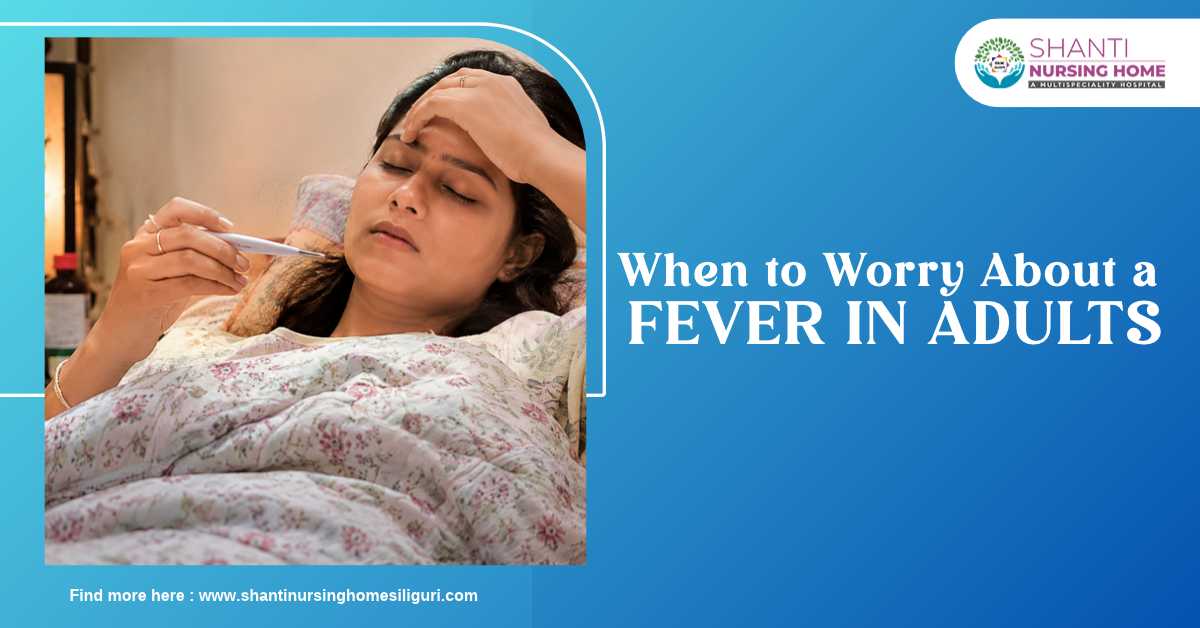

A few degrees higher on the thermometer may not be the only thing you need to worry about. How long the fever lasts, how you feel, and whether new symptoms appear can also matter. Some signs are easy to overlook, but recognising changes in your health can help you decide when to seek medical care.
Everyone experiences a fever differently. You may notice tiredness, chills, sweating, or body aches, while someone else may have a raised temperature without many noticeable symptoms. How you feel during a fever also depends on your health and what is causing it.
When it comes to fever in adults, there is no single set of symptoms that everyone experiences. Pay attention to how your body feels, whether your condition is changing, and how long the fever continues. If you are concerned about any changes, speak with a doctor at Shanti Nursing Home or near you for advice.
What Are the Common Symptoms of Fever in Adults?
A raised body temperature may come with changes in how you feel. You might experience chills, sweating, headaches, or body aches. Some people also feel unusually hot or cold, tired, or less interested in food.
Other symptoms you may notice include:
- Feeling unusually hot or cold.
- Chills or shivering.
- Sweating.
- Headache.
- Muscle and body aches.
- Weakness or tiredness.
- Reduced appetite.
- Increased thirst.
- General discomfort.
Not everyone experiences the same symptoms.Some people notice several changes, while others may have a fever without many noticeable symptoms. What you experience can also depend on the underlying cause and your overall health.
When Should Adults Worry About a Fever?
1- Fever That Reaches 40°C (104°F) or Higher
A temperature of 40°C (104°F) or higher needs prompt medical advice. Do not wait for other symptoms to appear.
Pay attention to:
- Your temperature reading.
- How you feel.
- Any changes in your condition.
2- Fever That Lasts More Than Three Days
If your fever continues for more than three days or returns after settling, speak with a doctor.
Watch for:
- Fever that does not settle.
- Repeated episodes of fever.
- Symptoms that continue.
- New changes in your health.
The number of days alone does not tell you how serious the situation is. Seek help sooner if you feel very unwell.
3- Difficulty Breathing or Chest Pain
Breathing problems or chest pain with a fever should not be ignored.
Consider:
- Shortness of breath.
- Rapid or difficult breathing.
- Difficulty speaking comfortably.
- Persistent or severe chest pain.
Seek emergency medical care if you experience these symptoms.
4- Severe Headache or Stiff Neck
Pay attention if a fever comes with a severe headache or neck stiffness.
Other signs may include:
- Pain when bending the neck.
- Sensitivity to light.
- Repeated vomiting.
- An unusual or severe headache.
These symptoms may be associated with meningitis or another serious condition. Seek emergency medical attention.
5- Confusion, Unusual Drowsiness or Fainting
Changes in behaviour or alertness need immediate attention.
Watch for:
- Difficulty staying awake.
- Confusion.
- Unusual behaviour.
- Difficulty responding normally.
- Fainting or loss of consciousness.
Seek emergency help if these changes occur.
6- Persistent Vomiting or Signs of Dehydration
Repeated vomiting or difficulty drinking fluids can make it harder to stay hydrated.
Observe:
- Inability to keep fluids down.
- Very little or dark urine.
- Dry mouth.
- Dizziness when standing.
- Unusual weakness.
Consult with a doctor if these signs appear. Seek urgent help for fainting or confusion.
7- Severe Abdominal Pain or an Unusual Rash
Pay attention to new skin changes or stomach pain during a fever.
Some signs to watch for are:
- Severe or worsening abdominal pain.
- A rash that spreads quickly.
- Small red or purple spots.
- A rash that does not fade when pressed.
A rash that does not fade when pressed needs emergency assessment, particularly if you also have a fever or feel very unwell.
8- Fever in Adults With a Weakened Immune System
Some people need medical advice as soon as they develop a fever.
This may include people who:
- Are receiving chemotherapy.
- Have had an organ transplant.
- Take medicines that suppress the immune system.
- Have been given specific instructions about fever by their doctor.
Which Fever Symptoms Require Immediate Medical Attention?
Some symptoms alongside a fever need immediate medical attention. Seek emergency care if you notice any of the following:
- Difficulty breathing or severe chest pain.
- Confusion, seizures, or loss of consciousness.
- Severe headache with a stiff neck.
- A rapidly spreading rash or red/purple spots that do not fade when pressed.
- Severe or worsening abdominal pain.
- Cold or clammy skin, extreme weakness, or collapse.
- Passing reduced amounts of urine or being unable to keep fluids down.
Do not wait for the temperature to rise further. Get emergency medical help if any of these symptoms occur.
What Causes Fever in Adults?
1- Viral Infections
Viral infections can cause fever in adults. These may include:
- Flu.
- Common respiratory viral infections.
- COVID-19.
- Other viral illnesses.
2- Bacterial Infections
Some bacterial infections may also cause a fever. These include:
- Urinary tract infections.
- Pneumonia.
- Skin and wound infections.
- Other bacterial infections.
3- Other Possible Causes
Not every fever is caused by an infection. Other possible causes include:
- Inflammatory conditions.
- Autoimmune conditions.
- Reactions to certain medicines.
- Other underlying medical conditions.
The cause of a fever cannot be identified by temperature alone. Symptoms, medical history, and a doctor's examination help determine what may be responsible. Further tests may be needed in some cases.
Who is at Higher Risk of Complications From Fever?
1- Adults With Weakened Immune Systems
Some people may need extra attention when they develop a fever. This includes:
- People receiving chemotherapy or other cancer treatments.
- Organ or bone marrow transplant recipients.
- People taking medicines that suppress the immune system.
- People with certain immune-related conditions.
If any of these apply to you, contact your healthcare team when you develop a fever.
2- Adults With Existing Health Conditions
If you have a long-term health condition, speak with your doctor about what to do if you develop a fever.
Some examples include:
- Diabetes.
- Chronic kidney or liver disease.
- Heart conditions.
- Chronic lung diseases, including COPD.
- Other ongoing medical conditions.
Your medical history can help your doctor decide what advice or assessment you may need.
3- Older Adults
A fever may not always be the first noticeable change in older adults. Pay attention to changes in their usual health and behaviour.
Some changes to notice include:
- Sudden confusion.
- Unusual weakness.
- Reduced appetite.
- Changes in normal behaviour.
- Unusual tiredness.
If an older person seems different from usual or becomes unwell, contact a healthcare professional.
4- People Who Have Recently Travelled or Had Surgery
Recent travel and surgery are important details to share with a doctor if you develop a fever.
Keep in mind:
- After travelling: Share your destination and any possible exposure during the trip.
- After surgery: Contact your healthcare team if you develop a fever after an operation or hospital discharge.
- During a consultation: Your travel history, medical history, and other symptoms may help the doctor decide whether further assessment is needed.
Do not ignore these details when discussing a fever with your doctor.
What Should You Do When You Have a Fever at Home?
If you have a fever, take time to rest and pay attention to how you feel. A few simple steps can help you stay comfortable.
- Get enough rest: Avoid strenuous activities.
- Drink fluids: Have water regularly.
- Check your temperature: Use a thermometer to note any changes.
- Wear comfortable clothes: Avoid wearing too many layers.
- Eat as you feel comfortable: Choose food that matches your appetite.
- Watch for changes: Notice any new or unusual symptoms.
- Follow medical advice: Speak with a doctor before taking medicines.
If your condition gets worse or you feel concerned, contact your doctor.
At the end
A fever in adults is a sign that something may be affecting your health. The temperature reading alone does not tell the whole story. How long the fever lasts, other symptoms, and your medical history are also important.
Pay attention to how you feel. Breathing difficulty, confusion, seizures, a severe headache with neck stiffness, or an unusual rash need urgent medical attention.
If your fever continues, gets worse, or makes you feel concerned, speak with a healthcare professional. Do not wait if you notice any serious symptoms.
A doctor's assessment can help find the reason for the fever and determine what care may be needed.
FAQs
Can I Have a Fever Without Feeling Unwell?
Yes. You may have a fever without noticing other symptoms.
Which Medicines Can I Take to Manage a Fever at Home?
Paracetamol may help lower a fever. Ask a doctor or pharmacist about the medicine and dose for you.
Should I See a Doctor If My Fever Keeps Coming Back?
Yes. Consult a doctor if your fever keeps returning.
How Many Days of Fever Is Considered Normal?
There is no fixed number of days that is normal for everyone. Consult a doctor if your fever lasts more than three days, gets worse, or causes concern.
